Positive Parenting Guide Workbook: A Tool for Connection Over Punishment
Parenting is one of the most challenging roles we take on, and it’s easy to feel overwhelmed by the constant demands of raising children. The Positive Parenting Guide Workbook offers a fresh approach that focuses on connection rather than control. Designed as a 22-page interactive resource, this guide is perfect for parents, teachers, and counselors who want to build stronger relationships with children through empathy and understanding.
Why Time-In Matters More Than Time-Out
Many parents rely on time-outs as a quick fix for misbehavior, but research shows that these strategies often miss the mark. The Positive Parenting Guide Workbook introduces the concept of time-in, which emphasizes staying connected with your child during moments of emotional intensity. Instead of isolating the child, you create a safe space where both of you can process feelings together.
For example, imagine a situation where your child is upset after a disagreement. Rather than sending them to their room, you sit with them, acknowledge their feelings, and help them find calm. This not only teaches emotional regulation but also strengthens trust and communication.
What Makes This Workbook Unique
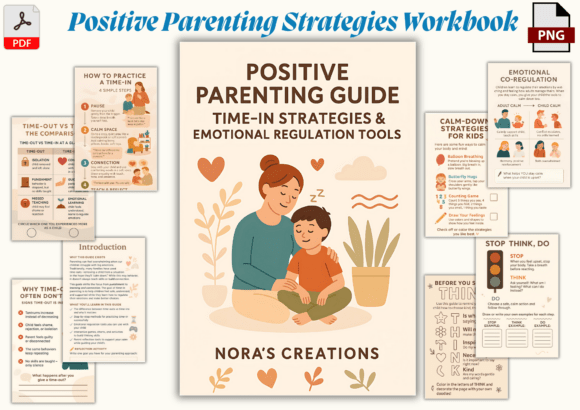
The Positive Parenting Guide Workbook is more than just a collection of tips—it's an interactive tool packed with practical activities and clear guidance. Sized at 6x9 inches, it comes in both PNG and PDF formats, making it easy to download, print, and use right away. The warm illustrations and step-by-step methods make it accessible for all ages and learning styles.
Inside, you’ll find a variety of resources designed to support your parenting journey. From a comparison chart between time-out and time-in to a feelings check-in chart, each section is crafted to help you understand and apply positive parenting techniques in real life.
Real-World Applications for Different Roles
The Positive Parenting Guide Workbook isn’t just for parents—it’s also valuable for educators and counselors. Teachers can use the tools to manage classroom behavior more effectively, while counselors can integrate the strategies into their sessions to support children’s emotional development.
For instance, a teacher might use the “Stop, Think, Do” system to help students regulate their behavior during transitions. Similarly, a counselor could guide a child through the body clues map to better understand how emotions affect their physical state.
Practical Examples of Use Cases
Let’s consider a few scenarios where the Positive Parenting Guide Workbook can make a difference:
- At Home: When a child is having a meltdown, using the “calm-down strategies” like balloon breathing can help them regain composure without feeling punished.
- In the Classroom: Teachers can use the “feelings check-in chart” to encourage students to express their emotions in a safe and structured way.
- During Therapy: Counselors can use the “emotional co-regulation” section to model calm behavior and help children learn to self-regulate.
Each of these examples shows how the workbook can be adapted to different settings, making it a versatile resource for anyone working with children.
Considerations Before Using the Workbook
Before diving into the Positive Parenting Guide Workbook, it’s important to consider your goals and readiness to implement new strategies. Some parents may need to start small, focusing on one or two techniques at a time. Others may benefit from reading the introduction to fully grasp the philosophy behind time-in.
Additionally, it’s helpful to reflect on your own emotional responses. The workbook includes a parent reflection box that encourages self-awareness, which is essential for effective parenting. By understanding your own triggers, you can respond more calmly and consistently to your child’s needs.
How to Get Started
Getting started with the Positive Parenting Guide Workbook is simple. You can download it in either PNG or PDF format, print it out, and begin using it immediately. The interactive nature of the workbook makes it engaging and easy to follow, even for those who are new to positive parenting.
One of the best features is the “time-in toolkit,” which helps you create a calm corner in your home. This space can be used during moments of stress or transition, offering a visual reminder of how to stay connected and grounded.
Building Emotional Awareness with Kids
Emotional awareness is a key component of healthy development, and the Positive Parenting Guide Workbook provides tools to help children recognize and manage their feelings. The “memory-making bracelet” activity, for example, encourages kids to reflect on their emotions and build a sense of self-awareness.
By incorporating these activities into daily routines, parents can foster a deeper understanding of emotions in their children. This not only improves behavior but also enhances communication and empathy.
Conclusion
The Positive Parenting Guide Workbook is more than just a resource—it’s a transformative tool that shifts the focus from punishment to connection. Whether you’re a parent, educator, or counselor, this guide offers practical strategies that can improve relationships and emotional well-being. With its interactive design and real-world applications, it’s an invaluable addition to any parenting toolkit.