Master Your Chess Journey
Chess is more than a game—it’s a mental workout, a strategic challenge, and a lifelong pursuit of growth. For players at every level, tracking progress and refining techniques can be the difference between casual play and competitive excellence. Enter the Chess Scorebook Training Journal, a tool designed to transform how you approach chess training. This 6x9 inch journal isn’t just a notebook; it’s a comprehensive system for analyzing games, improving skills, and celebrating milestones.
More Than a Notebook: A Chess Improvement Companion
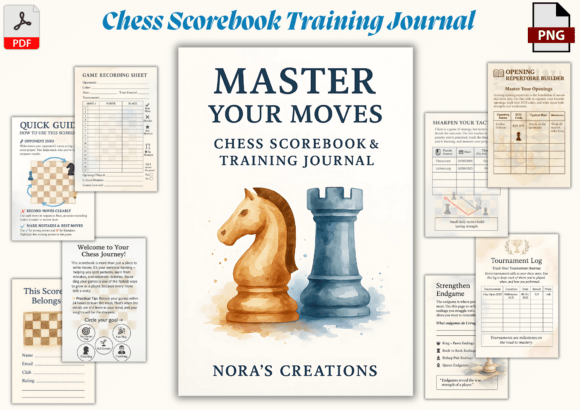
The Chess Scorebook Training Journal is structured to support both beginners and advanced players. With 121 pages, it offers a blend of practicality and inspiration. Its clean, modern design features watercolor accents that make each page visually engaging without overwhelming the content. The layout is intuitive, ensuring that users can navigate through different sections with ease.
Key Features That Make It Stand Out
- Game Recording Sheets: Log opponents, moves, and lessons learned in a structured format that helps identify patterns and areas for improvement.
- Tactical Trackers: Sharpen your calculation skills by recording puzzles and reviewing them regularly.
- Opening Repertoire Builder: Organize your favorite openings using ECO codes and assess their strengths and weaknesses.
- Tournament Log: Keep track of tournaments, results, and achievements to measure progress over time.
- Win Loss Statistics: Use the visual chart to shade in your performance and see where you stand.
- Endgame Notes: Reflect on endgame strategies with guided checklists and prompts for deeper analysis.
- Inspirational Quotes: Learn from grandmasters while reflecting on your own journey.
- Goals Reflection Pages: Set short-term goals, develop habits, and dream about long-term rating aspirations.
- Certificate of Achievement: Celebrate milestones with a personalized certificate that adds a touch of pride to your training.
Practical Applications Across Multiple Contexts
The versatility of the Chess Scorebook Training Journal makes it suitable for a wide range of users. Whether you're an educator looking to teach chess to students or a business professional seeking to enhance cognitive skills, this journal offers value beyond the board.
For educators, the journal can serve as a teaching aid. Students can use it to record their games, reflect on their mistakes, and set learning objectives. Teachers can review these entries to provide targeted feedback and support.
Professionals such as marketers or entrepreneurs may find the journal useful for developing strategic thinking. The structured format encourages disciplined planning and goal setting—skills that are transferable to business environments.
Freelancers and creators often need to manage multiple projects simultaneously. The journal’s ability to track progress and organize thoughts can help maintain focus and efficiency, especially when balancing creative work with personal development.
For bloggers and publishers, the journal can be a resource for documenting ideas and insights. Its reflective pages encourage deep thinking and self-assessment, which can lead to more meaningful content creation.
Enhancing Productivity and Communication
The Chess Scorebook Training Journal also promotes better communication and productivity. By keeping detailed records of games and reflections, users can share insights with coaches, peers, or mentors. This exchange of information fosters a collaborative environment and accelerates learning.
Additionally, the journal’s visual elements—such as the win/loss chart and certificate—add a layer of motivation. These features not only track progress but also celebrate achievements, making the process of improvement more rewarding.
Real-World Examples and Recommendations
Consider a scenario where a club player uses the journal to analyze their recent games. By logging each move and noting errors, they can identify recurring mistakes and work on specific tactics. Over time, this structured approach leads to noticeable improvements in gameplay.
A professional might use the journal to maintain a consistent training routine. Setting daily or weekly goals helps build discipline, which is crucial for sustained success. The reflection pages encourage mindfulness, helping users stay focused on their long-term objectives.
For students, the journal can be an excellent tool for integrating chess into their study routine. The combination of structured pages and inspirational quotes keeps them motivated, even during challenging periods.
When selecting a chess training journal, consider factors like portability, durability, and design. The Chess Scorebook Training Journal is compact enough to carry anywhere, yet robust enough to withstand frequent use. Its PDF and PNG formats also allow for easy printing or digital sharing, making it accessible to a broader audience.
Conclusion
The Chess Scorebook Training Journal is more than just a notebook—it’s a powerful tool for anyone serious about improving their chess skills. Its thoughtful design, structured pages, and motivational elements make it ideal for players of all levels. Whether you’re preparing for a tournament or simply enjoying the game, this journal supports your journey with clarity, purpose, and style.