Do You Wonder About Rain, Snow, and Hail?
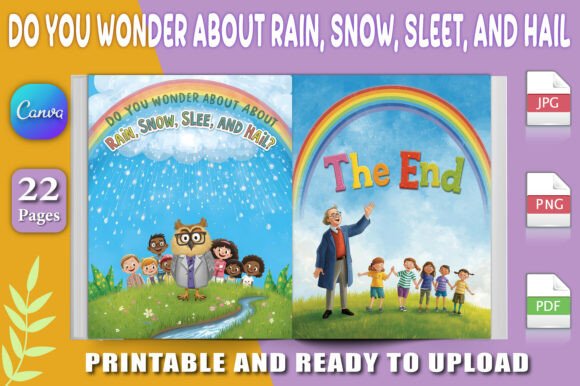
Have you ever looked up at the sky and wondered why it rains, or why snow falls in winter, or why hail sometimes hits your roof? These are natural phenomena that shape our world, and understanding them can be both fascinating and educational. Do You Wonder About Rain, Snow, and Hail is a children’s educational book designed to spark curiosity about the water cycle and different forms of precipitation—rain, snow, sleet, and hail. Through simple explanations, fun facts, and engaging questions, this book introduces young readers to the science behind weather and its role in sustaining life.
Why This Book Matters for Young Learners
Children between the ages of 5 and 9 are at a critical stage of learning about the world around them. They are naturally curious, and books like Do You Wonder About Rain, Snow, and Hail provide a perfect platform to nurture that curiosity. The book simplifies complex scientific concepts into digestible pieces that are easy for young minds to grasp. By exploring the water cycle and different types of precipitation, children not only learn about weather but also gain an appreciation for the natural processes that sustain life on Earth.
The book uses visual aids and interactive elements to keep children engaged. Each page is filled with colorful illustrations and clear diagrams that help explain how water moves through the environment. Whether it’s a raindrop falling from a cloud or a snowflake forming in the sky, these visuals make abstract ideas more tangible. The inclusion of fun facts adds an element of excitement, encouraging kids to ask questions and think critically about the world around them.
Strategic Use in Educational Settings
For educators and parents, Do You Wonder About Rain, Snow, and Hail offers a valuable tool for teaching basic science concepts in a way that is both accessible and enjoyable. The book can be used as part of a broader curriculum on weather, environmental science, or even geography. Its structured approach makes it easy to integrate into lesson plans, and its engaging style ensures that students remain interested and motivated.
One of the key advantages of this book is its ability to support diverse learning styles. Visual learners benefit from the illustrations and diagrams, while auditory learners may find value in reading aloud the fun facts and explanations. Kinesthetic learners can participate by drawing their own raindrops, snowflakes, or storm clouds, reinforcing their understanding through hands-on activities.
Additionally, the book promotes interdisciplinary learning. It connects science with art through its beautiful illustrations and encourages language development by introducing new vocabulary related to weather and the water cycle. This holistic approach helps children develop a well-rounded understanding of the subject matter.
Practical Tips for Using the Book Effectively
To maximize the benefits of Do You Wonder About Rain, Snow, and Hail, consider the following strategies:
- Read Aloud Together: Reading the book aloud with your child can enhance comprehension and foster a love for reading. Discuss the questions and facts presented in the book to encourage critical thinking.
- Encourage Hands-On Learning: Use the book as a springboard for experiments or activities. For example, create a mini water cycle in a jar or observe how different types of precipitation form in real life.
- Connect to Real-World Experiences: Talk about recent weather events and relate them to what the book teaches. This helps children see the relevance of what they’re learning in their everyday lives.
- Use as a Discussion Tool: Ask open-ended questions to stimulate conversation. For instance, “What do you think happens to rainwater after it falls?” or “How does snow help plants grow?”
When to Use This Book and What to Consider
Do You Wonder About Rain, Snow, and Hail is best used when the goal is to introduce or reinforce basic scientific concepts in a fun and engaging way. It is particularly useful during the early stages of learning about weather, as it provides a solid foundation for more advanced topics later on.
Before relying on the book, consider the following:
- Age Appropriateness: Ensure that the content aligns with the developmental level of the child. While the book is suitable for ages 5–9, some sections may require additional explanation for younger readers.
- Learning Objectives: Define clear learning goals to guide how the book is used. Is the focus on science, literacy, or creativity? Tailor the use of the book accordingly.
- Supplementary Materials: Pair the book with other resources such as videos, games, or outdoor activities to create a more comprehensive learning experience.
- Assessment: Regularly assess your child’s understanding to determine if the book is meeting its intended purpose. Adjust the approach as needed based on their progress.
Long-Term Value and Strategic Benefits
While Do You Wonder About Rain, Snow, and Hail is primarily a children’s educational book, its strategic value extends beyond just teaching science. The book fosters a lifelong love of learning and curiosity, which are essential skills for success in any field. By encouraging children to explore and question the world around them, the book lays the groundwork for future problem-solving and critical thinking abilities.
For educators and parents, using this book intentionally can contribute to long-term outcomes such as improved academic performance, increased engagement in learning, and enhanced communication skills. The book also supports the development of soft skills like creativity, collaboration, and adaptability, which are increasingly valued in today’s rapidly changing world.
Moreover, the book’s emphasis on the water cycle and the importance of water in sustaining life can be linked to broader environmental awareness. Teaching children about the natural processes that support life helps cultivate a sense of responsibility and stewardship for the planet.
Creating a Strong Foundation for Future Learning
Books like Do You Wonder About Rain, Snow, and Hail play a crucial role in building a strong foundation for future learning. By introducing fundamental scientific concepts in an accessible and engaging way, the book equips children with the tools they need to explore more complex ideas as they grow.
It also supports the development of cognitive skills such as observation, analysis, and reasoning. As children learn to connect the dots between different aspects of the water cycle and weather patterns, they begin to see the interconnectedness of natural systems—a skill that is vital for understanding the world in a more holistic way.
In addition, the book encourages a growth mindset by showing that learning is a continuous process. It reinforces the idea that asking questions and seeking answers is a valuable and rewarding pursuit, which can inspire children to pursue knowledge throughout their lives.
Conclusion: A Thoughtful Investment in Education
Choosing the right educational materials is a strategic decision that can have a lasting impact on a child’s development. Do You Wonder About Rain, Snow, and Hail is not just a book—it is a gateway to a deeper understanding of the natural world. By combining science, creativity, and curiosity, it offers a unique and effective way to engage young learners in the wonders of nature.
Whether you are an educator, parent, or creator looking to support early childhood education, this book provides a valuable resource that aligns with both educational goals and the needs of young learners. With its clear explanations, engaging visuals, and thought-provoking questions, it is a strategic choice that supports learning, growth, and discovery.